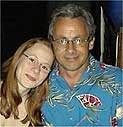
 When I first “met”
Phil on the Internet, he was one in a million men in the UK living a life
with an undetected illness. He’d won his Testicular Cancer battle a few
years back and should have been back to leading a normal life, having
recovered from the illness long ago.
Instead, Phil’s life was in tatters. His energy had gone. His girlfriend
and son had gone. His temper had gone and he was confused, depressed and
unable to work. There was nothing wrong with his libido however.
Phil was also committed to the need to get Testicular Cancer into the news
and keep it there. We first met properly after he invited me to help with
one of his Testicular Cancer awareness presentations to Army soldiers.
We had a chat then. A chat that made me suggest he get tested for low
Testosterone. I already knew what the test would reveal, such is the
classic combination of symptoms.
Back the result came, revealing Phil was “low normal”, therefore OK so far
as an NHS Endocrinologist was concerned. His reading was 13 nmol/l. When I first “met”
Phil on the Internet, he was one in a million men in the UK living a life
with an undetected illness. He’d won his Testicular Cancer battle a few
years back and should have been back to leading a normal life, having
recovered from the illness long ago.
Instead, Phil’s life was in tatters. His energy had gone. His girlfriend
and son had gone. His temper had gone and he was confused, depressed and
unable to work. There was nothing wrong with his libido however.
Phil was also committed to the need to get Testicular Cancer into the news
and keep it there. We first met properly after he invited me to help with
one of his Testicular Cancer awareness presentations to Army soldiers.
We had a chat then. A chat that made me suggest he get tested for low
Testosterone. I already knew what the test would reveal, such is the
classic combination of symptoms.
Back the result came, revealing Phil was “low normal”, therefore OK so far
as an NHS Endocrinologist was concerned. His reading was 13 nmol/l.
This outcome highlights the problem for the other 999,999 or so, men in
the UK. They are “low normal”, untreated, and living miserable lives. They
are on the road to ill health, with dead relationships, threatened
employment and poor quality of life.
In short, those men are social misfits. The reason for this injustice is
Doctors do not treat men until their levels are so low, that symptoms have
been in existence for a long time, causing untold damage to a previously
happy life. Such is the current NHS policy.
The problem with that policy, quite apart from any considerations about
when to give Testosterone therapy, which, by the way, is now helping Phil
to get his life back in order, is that the testing procedure makes sure
people with problems in the Pituitary gland and elsewhere in the body,
also remain undetected and untreated. Therapy for those patients does not
normally include Testosterone therapy and they probably form the larger
part of the million men waiting for help.
It’s not hard to see that a million men with lives in disarray, have a
negative impact on society. The arguments against changing the official
line have been the same for many years, probably leading to the high
number of aging people living an existence with a debilitating disease..
Too little research, too few numbers, inconclusive evidence, are all
standard phrases when it comes to discussing Testosterone Deficiency.
It’s time our society stopped running away from new research and science.
We have moved on. Having been forced into Testosterone therapy in 1988,
when I lost both testicles to Testicular Cancer, I have experienced the
progress made in the recent past, as compared to the early years. New
Testosterone therapy does not pose the same risks of overdose that older
therapies gave. New research and a warning about the dangers of not
treating men with lowering Testosterone by the Americans remains ignored.
My life, in common with other men receiving correct treatment is restored
to a point where I feel happy to live and be a productive member of
society.
Phil has allowed me a voice on Checkemlads and I am eternally grateful to
my Scouse mate. There is no reason not to diagnose earlier than we do. His
experience is shining testimony for the need to act before the patient’s
life becomes ruined. His courage in letting me tell this tale speaks for
itself. He really is one in a million!
Nick O'Hara Smith
Author/Publisher The Testosterone Deficiency Centre
Associate Editor The Testicular Cancer Resource Centre
contact Nick at
www.androids.org.uk if you have survived or have testicular cancer. |